


Energy Shock Meets BTC Momentum

KEY TAKEAWAYS
- Energy-driven inflation risk rises the longer the Strait of Hormuz remains closed.
- Global yields are rising as BTC positioning is mixed with weak seasonality.
- BTC is showing technical strength with institutional demand improving.
DIGITAL ASSET COMMENTARY
Geopolitical risk remains elevated, with the Middle East conflict and control over the Strait of Hormuz continuing to pressure global energy markets. Oil remains above $100, while gasoline and diesel prices are rising nationwide. Prolonged disruption would likely push oil and petrochemical prices even higher, reinforcing inflationary pressures. Food inflation may follow in coming months as fertilizer costs spike and potential crop yield declines materialize.
At the macro level, global long-term yields continue to rise, increasing strain on sovereign debt markets. Meanwhile, legacy equity indices sit at all-time highs, which may shift relative value considerations across asset classes. Within equities, software appears oversold relative to semiconductors, and the IGV ETF (highly correlated to BTC) may have already bottomed.
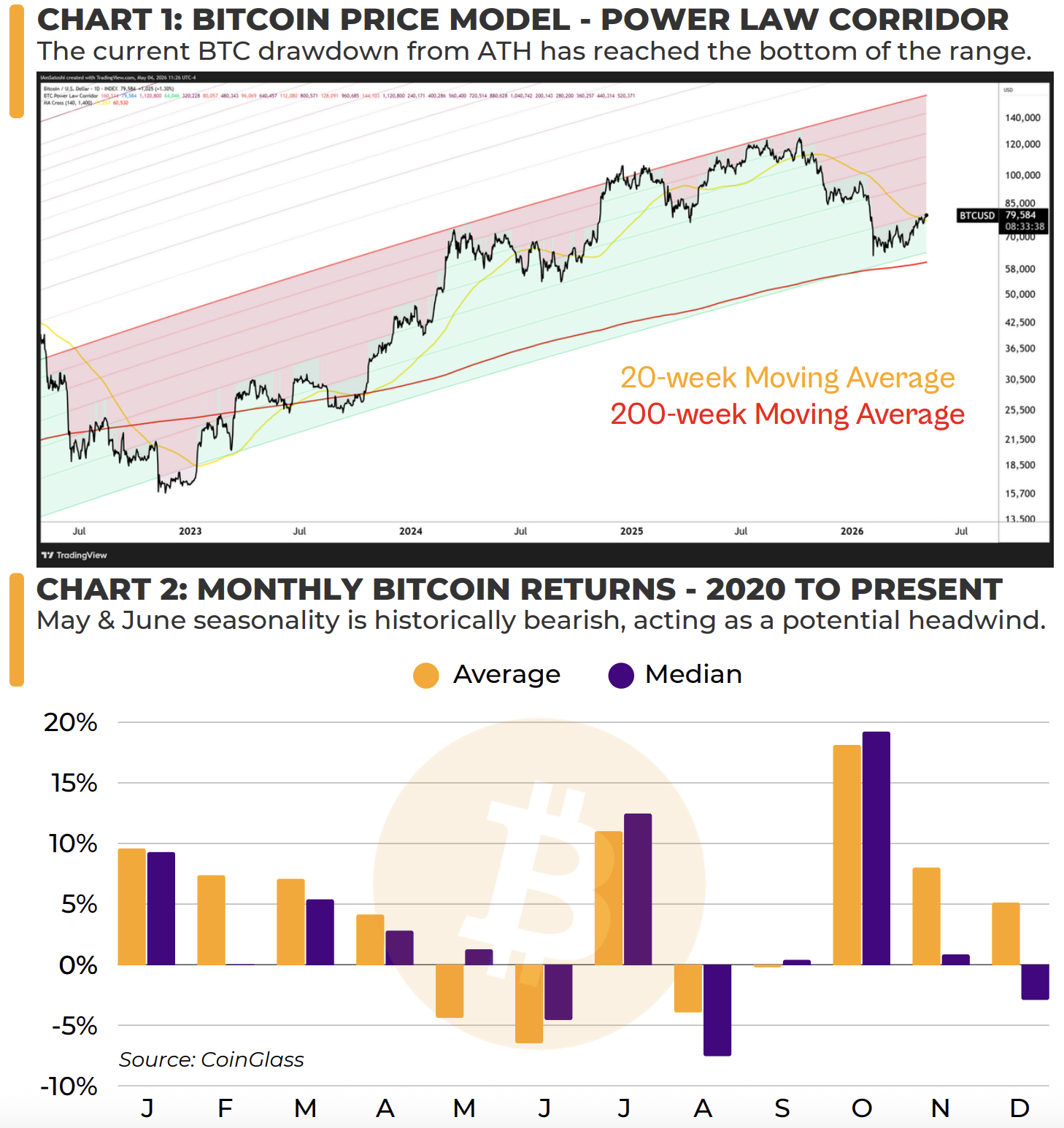
Positioning and supply dynamics remain a mixed picture. CME CoT data shows miners net short, a signal that has historically been directionally accurate. Miners are also reducing hash rate and selling BTC to fund a pivot toward AI/HPC infrastructure, adding incremental supply pressure. Spot ETF positioning could also act as resistance, with an aggregate cost basis around $80–82K potentially driving breakeven selling. Seasonally, May and June have been unfavorable for BTC in the post-COVID period.
On the constructive side, BTC is showing improving technical strength. Price is tradingabove the daily Ichimoku Cloud for the first time since October 2025 and remains above the20-week moving average. BTC is now up roughly 30% from the February bottom and nearlytested the 200-week moving average during the prior 50% drawdown, an area aligned withthe miner average cost of production. Price is also rebounding from the lower bound of thewidely followed Power Law Corridor. Institutional demand remains supportive, with ETFinflows and continued buying from MicroStrategy helping absorb supply.


