


No Place to Hide

KEY TAKEAWAYS
- Strait of Hormuz disruption is driving fuel scarcity & geopolitical uncertainty.
- Energy shock is tightening liquidity, delaying rate cuts, & pushing inflation higher.
- Crypto remains range-bound, with direction hinging on the war’s outcome.
DIGITAL COMMENTARY
Shifting objectives, and at times a lack of clarity, around the Middle East conflict and the Strait of Hormuz continue to drive uncertainty. According to Bloomberg estimates, the strait’s closure has created around an 11 million barrel-per-day oil supply shortfall. Fuel scarcity, rationing, and hoarding have already begun in parts of Asia, with conditions likely to worsen the longer the disruption persists. Messaging from President Trump has added to the uncertainty, alongside reports of thousands of additional troops being deployed to the region and potential plans for boots on the ground.
Energy costs are rising rapidly. The national average gas price, per AAA, is approaching $4.00, up roughly $1.00 in the past month. These increases have not yet been fully reflected in inflation data but are likely to push aggregate inflation back above 3%. In response, financial markets are experiencing ongoing deleveraging, systemic stress, and tightening liquidity. Traditional safe havens have been limited primarily to energy equities and short-term Treasuries, while US rate expectations are now anchored to a hold through the end of 2028.
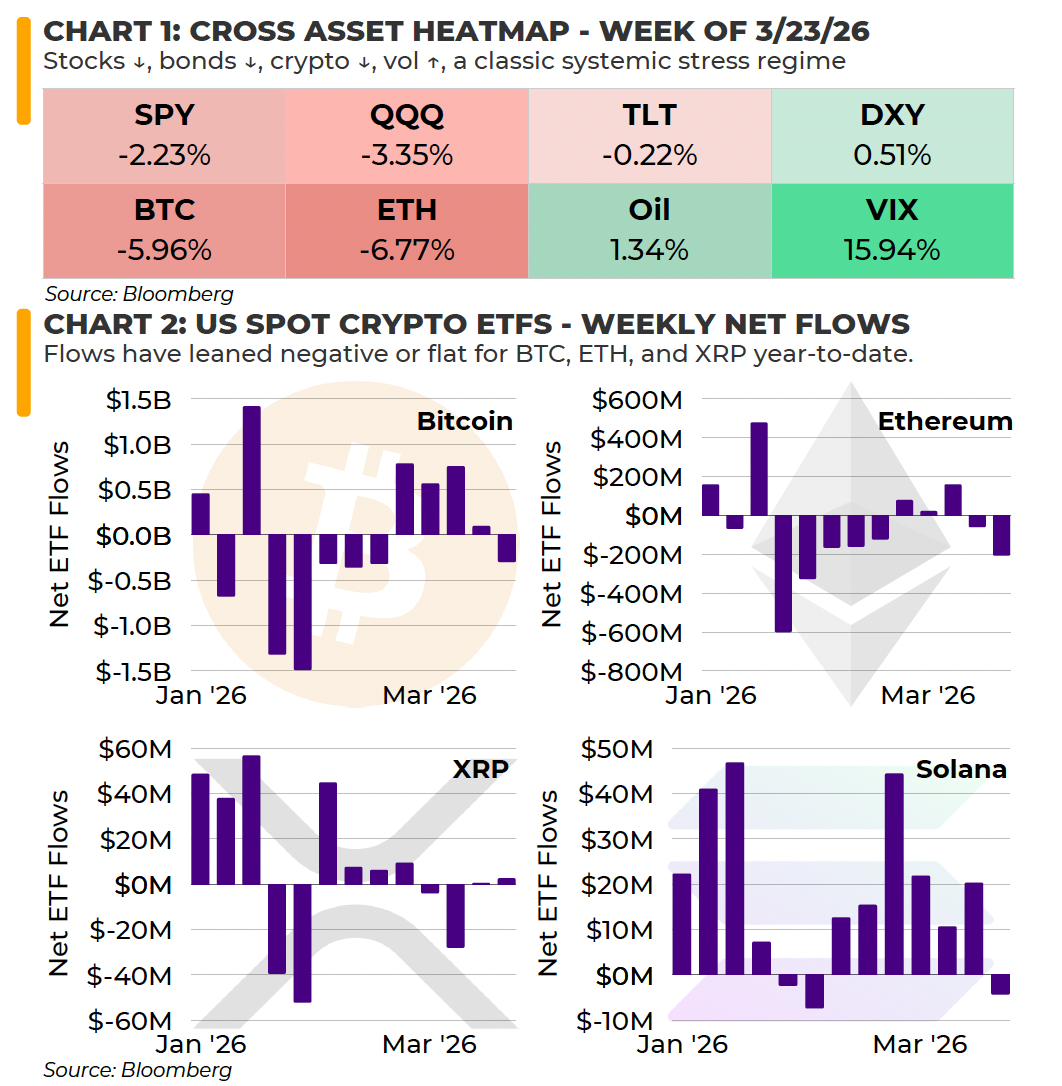
Despite this backdrop, and in contrast to traditional risk assets grinding lower, BTC and large-cap crypto have remained relatively resilient, holding within a multi-month range. This stability has persisted even as ETF flows have turned flat to negative in recent weeks.
This sets up a bimodal outcome for digital assets: if the conflict resolves quickly, crypto could emerge as one of the strongest asset classes off the lows. However, if the situation drags on and fuel shortages drive oil prices higher, traditional risk assets are likely to sell off further, with crypto at risk of breaking into a third leg down from its October 2025 highs.


