


Weekend War, Weekday Peace
.png)
KEY TAKEAWAYS
- Geopolitics: US-Iran escalation raises oil, inflation, and risk concerns.
- Macro: Fed hold expected; Warsh guidance remains key for rates and USD.
- Crypto: BTC leads markets; breakout could spark broader altcoin momentum.
DIGITAL ASSET COMMENTARY
The US–Iran conflict has escalated in recent days, with expanded military strikes, Iranian missile and drone retaliation, and growing concerns about a broader regional conflict. Markets remain focused on the risk of disruption to the Strait of Hormuz, which could push oil prices higher and add renewed inflationary pressure.
Major indices continue to trade in a range, with technology stocks showing relative weakness. The Fed has entered its blackout period ahead of the July 29th meeting, with CME futures currently pricing in an 80% probability of a hold. Any forward guidance from Fed Chair Warsh could have meaningful downstream effects on rates and US dollar
strength. Before taking the role, Warsh was viewed as dovish and a strong advocate for rate cuts; however, recent inflation data may influence the pace and timing of future policy changes.
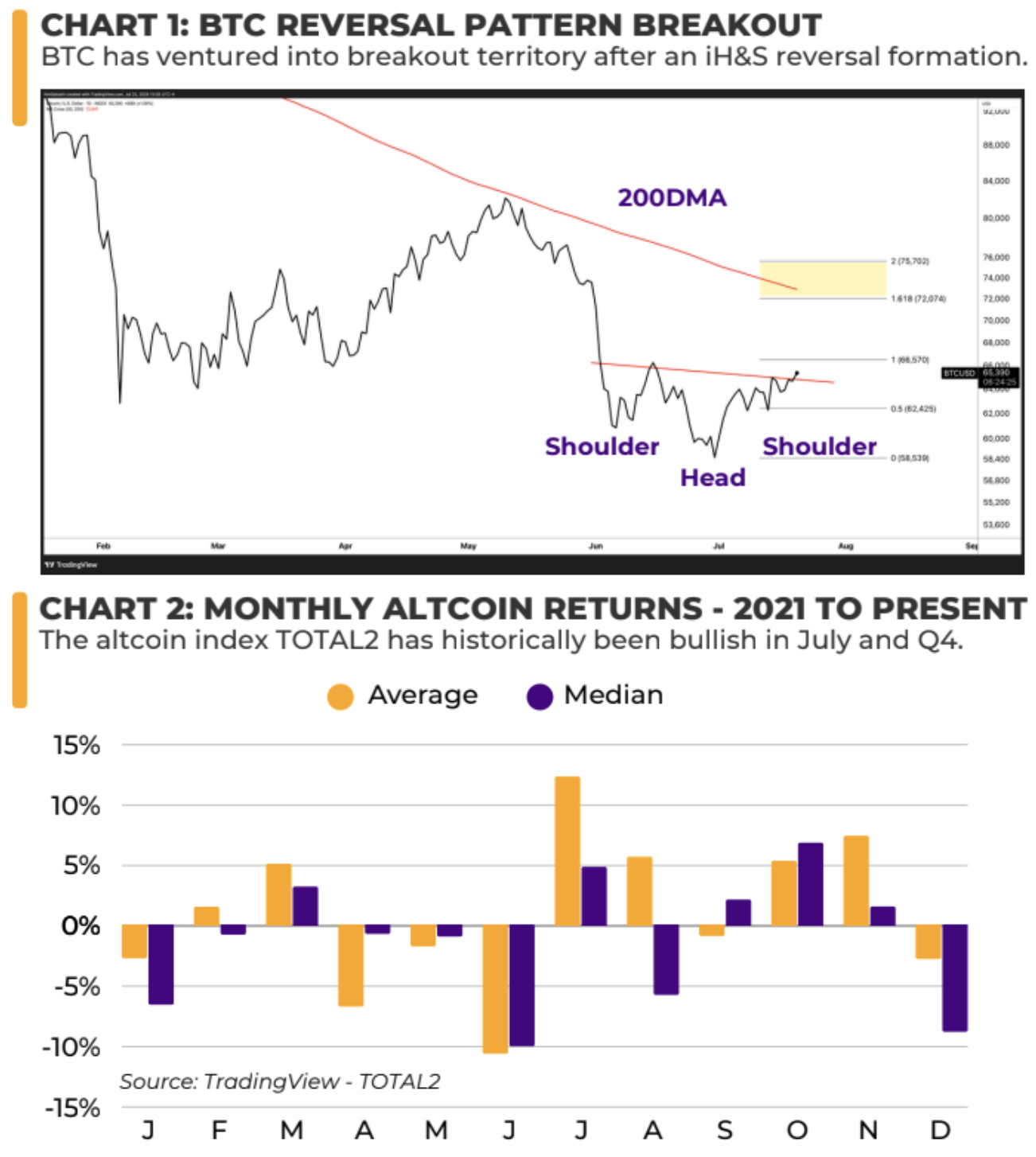
In recent weeks, BTC has continued to outperform both metals and major equity indices, potentially benefiting from capital rotation as AI-related stocks pull back. BTC ETF flows have shifted from heavily negative to slightly positive, while CME Commitment of Traders (CoT) positioning remains bearish. BTC, ETH, XRP, LTC, and SUI have all formed inverted head-and-shoulders patterns, with BTC’s measured move target near $73K, a level that also aligns with the 200-day moving average.
If BTC’s breakout continues, altcoins are likely to follow with increased momentum. Historically, July has been a strong month for both BTC and many altcoins, though seasonal
weakness often follows. The successful passage of the CLARITY Act could provide an additional catalyst for real-world asset (RWA)-focused tokens such as ETH and LINK.


